sold
GEORGIAN – VICTORIAN FRENCH SILVER & FOILED DIAMOND PASTE RIVIÈRE BANGLE/BRACELET 19th CENTURY ANTIQUE
£495.00
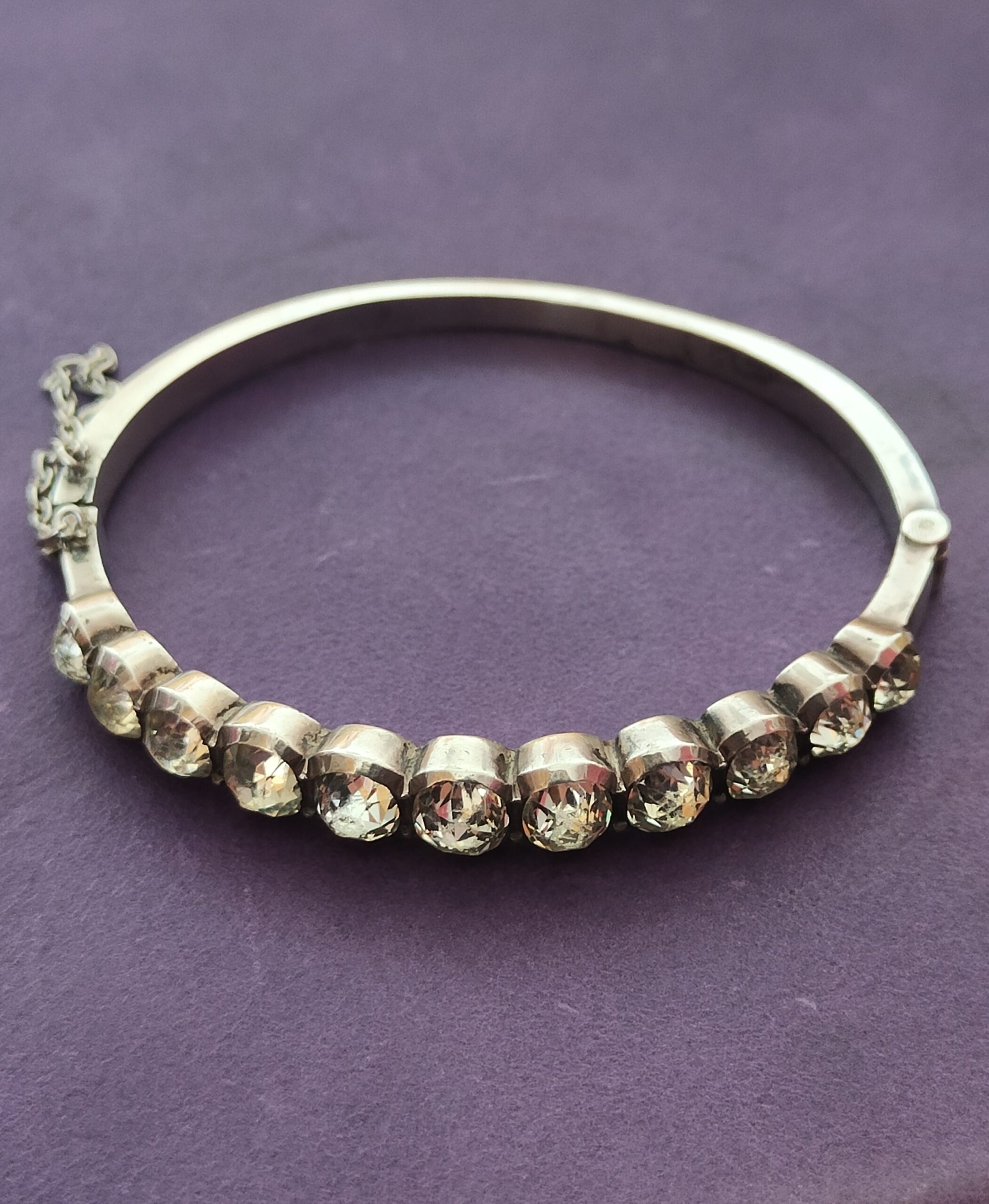
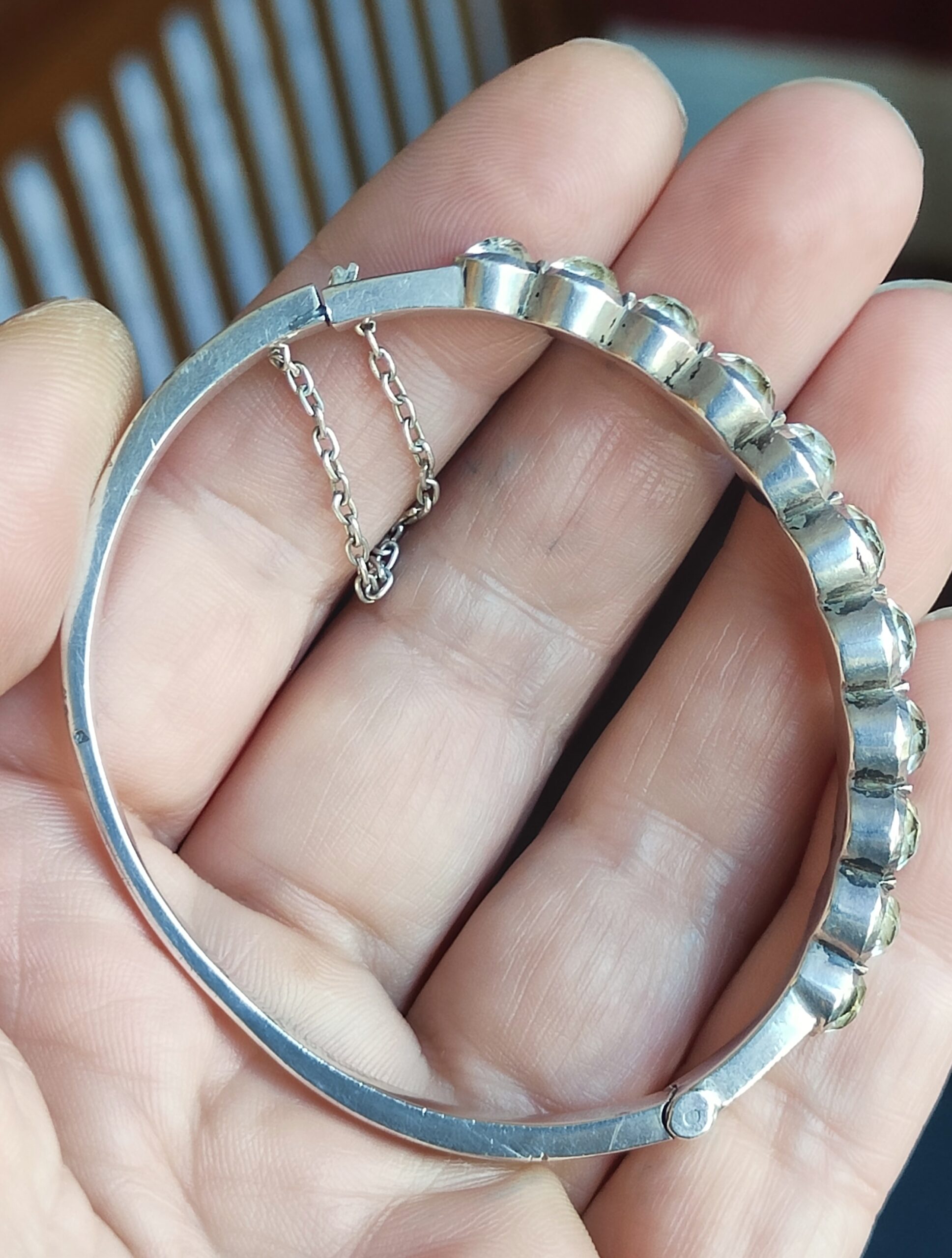
This listing is for a very rare, early-mid 19th century, French, foiled, hand cut lead paste bracelet, the large and stunning pastes hand faceted and set in rub over pinched collet mounts, typical of the period. Later examples are typically open backed, and feature factory produced paste , which can be identified as such due to greater regularity in the shape and size of the facet edges. Even machine manufactured paste of the 19th century might not be perfectly exact (unlike that produced today), but compared to pre machine stone cutting that was performed using a hand powered cutting wheel, these irregularities -although of no consequence in terms of beauty of effectiveness- should be evident under close examination, in that each stone will differ from the next. Shaping paste and gemstone in the 18th and early 19th century required each stone to be shaped, sized, and facet is cut individually. This was an extremely lengthy and skilled process.
Throughout the 18th and 19th centuries, France and the UK were the premium manufacturers of Europe’s paste jewellery. Imitation gemstone had been in use for millennia, with evidence of the ancient Romans using glass coloured like precious gemstone, but it took off again in a big way from the early 18th century, when lead was introduced to improve durability and allow the paste to be cut and shaped. Far more brittle than diamond it took immense skill to work with and was not treated as inferior to natural gemstones. The highest quality white diamond rough from Africa was not discovered until much, much later, and natural diamond was both scarce and lacked the colour clarity that diamond paste could produce. Bigger and more gems were also possible with paste, leading to the creation of entire, complex suites of jewellery featuring brilliantly sparkly, matching paste. Diamond and coloured pastes were therefore immensely popular throughout the 18th and 19th centuries: especially with the Nobility and ruling classes: paste was not viewed as lesser than, or as a substitute for diamond, but as a desirable material in its own right.
DESCRIPTION AND CONDITION
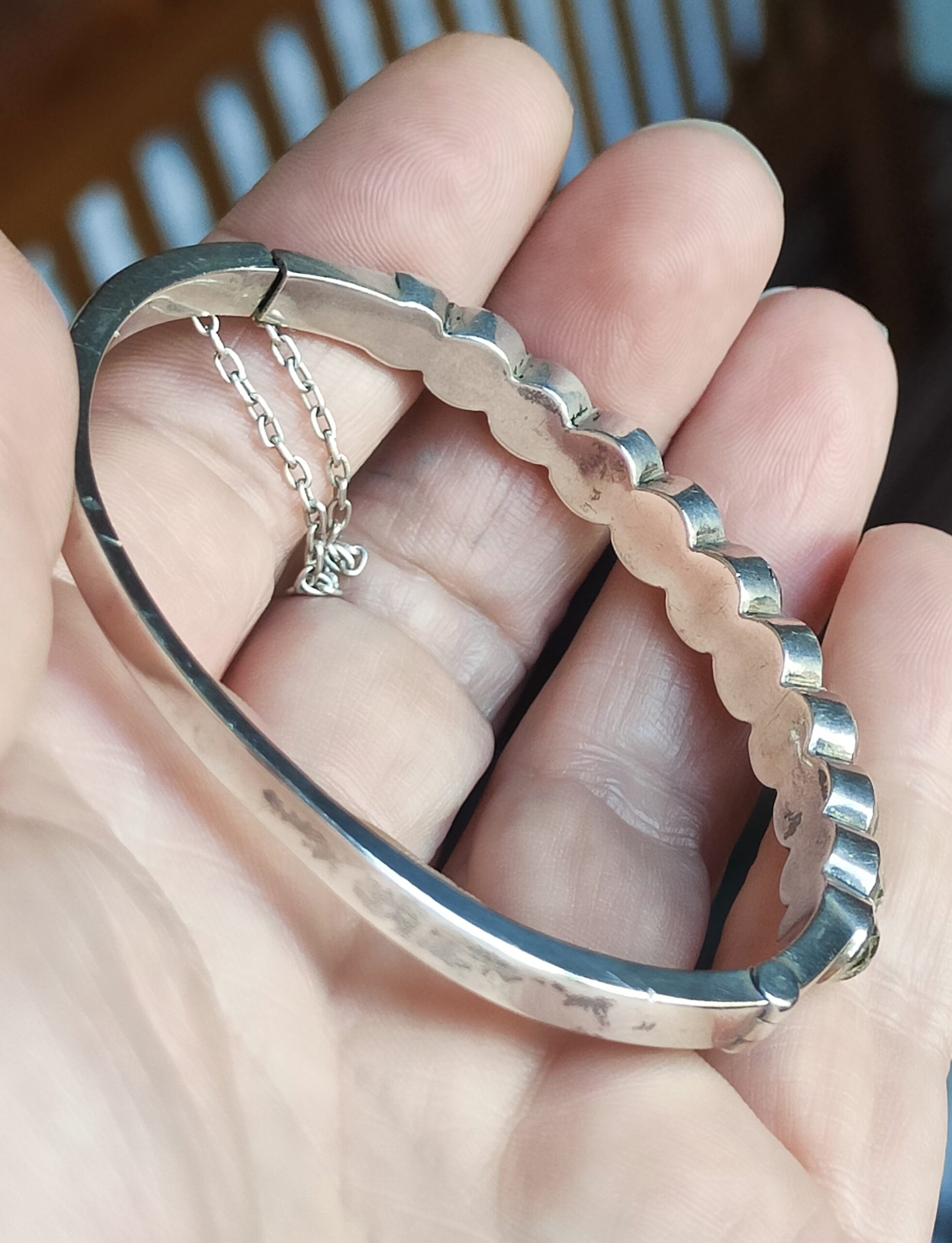
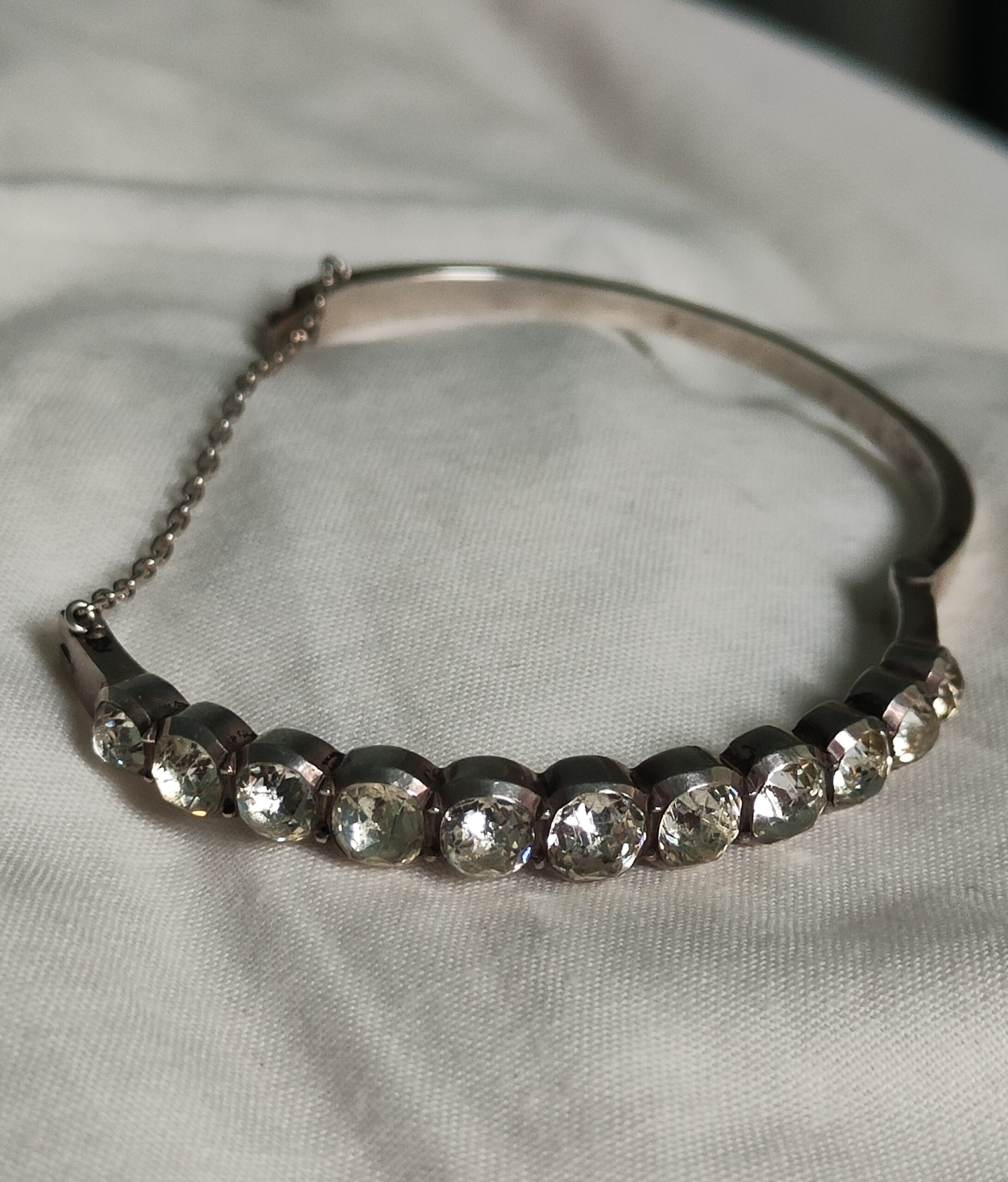
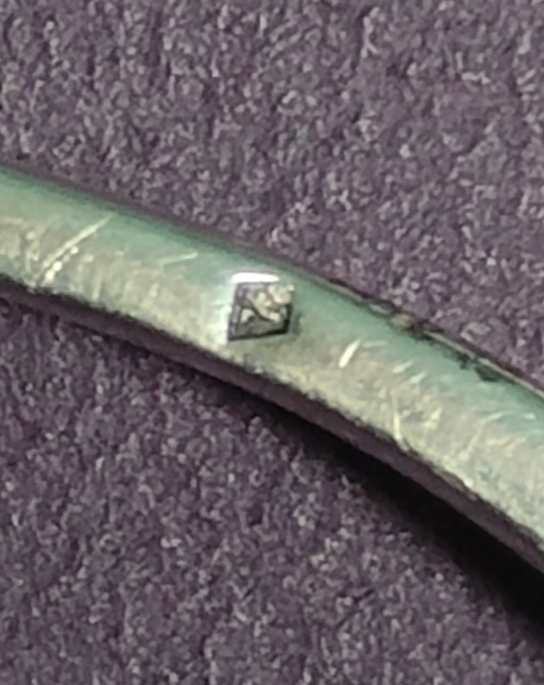
This bracelet is in the simple rivière style of the pre and very early Victorian age: closely set gemstones with unobtrusive collet mounts with simple, subtle, connectors meant the stones spoke for themselves: the style is said to have been inspired by the lights sparkling along the coastline of the French Riviera, which is why In this style of necklace/bracelet, the precious metal mounts are as plain as possible to ensure the stones are the focal point. This bracelet is set with 11 substantial, graduated old mine cut diamond pastes, a cutting style characteristic of the period, and capable of producing excellent, brilliant, depth and sparkle. Foiled for intensity, each stone has been individually cut and placed within a closed back, foil lined recess, then secured by silver rub-over and pinched collet mounts. The bracelet is in excellent, fully functional condition, but naturally age commensurate wear is present: there is wear to the facet edges of the stones, however there are no cracks or chips missing, all stones are original and present. The bangle hinge, safety chain, and push-in clasp are excellent, with no frailty or indication of repair. The bangle carries a single stamp: a makers mark inside a diamond cartouche. The paucity of hallmarks is correct for this early stage of the 19th century where the only stamps to be expected on silver are the makers mark (the diamond cartouche was introduced in the 18th century) and a silver grade stamp. This is absent here but the bangle tests as high purity silver (minimum sterling 925 grade) one of the stones is ever so slightly discoloured, which is not noticeable in full light, but mildly so in shade. This is a typical happenstance with age, and due to a little air or damp making its way behind the stone and degrading the silver foil. It by no means spoils its beauty: it was not mentioned when I bought it and I didn’t notice. I mention it because I strive to be honest always and prevent disappointment. Overall this stunning and rare bracelet is excellently preserved and in immediately wearable condition.
DETAILS
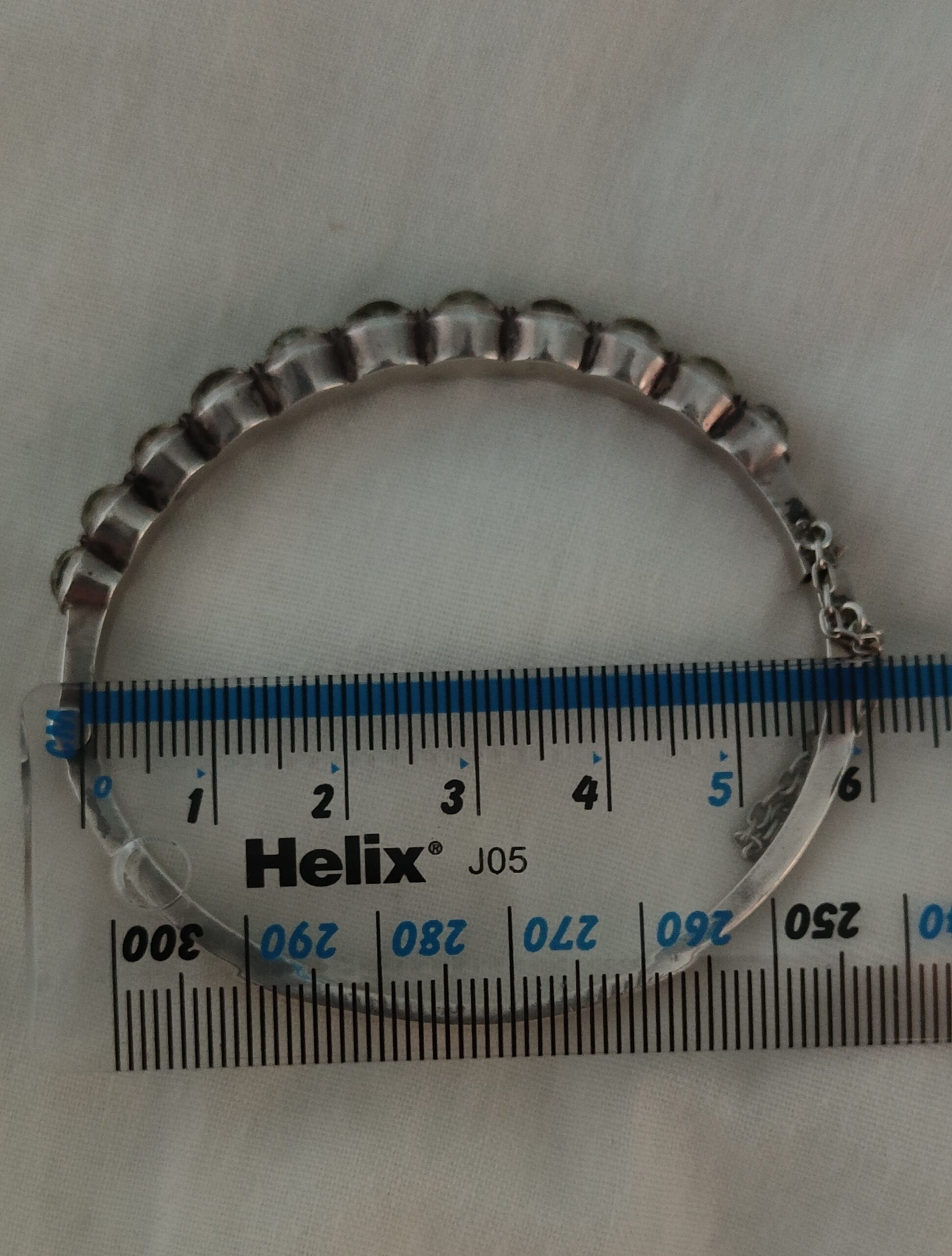
Dimensions: INTERNAL LENGTH
HINGE-TO-CLASP:- 57mm INTERNAL WIDTH:- 50mm
Weight: 20.87g
Materials: STAMPED FRENCH SILVER/
FOILED COLLETS
HAND CUT LEAD PASTE
Origin: FRANCE
Era: GEORGIAN – VICTORIAN
Original: YES
Handmade: YES