sold
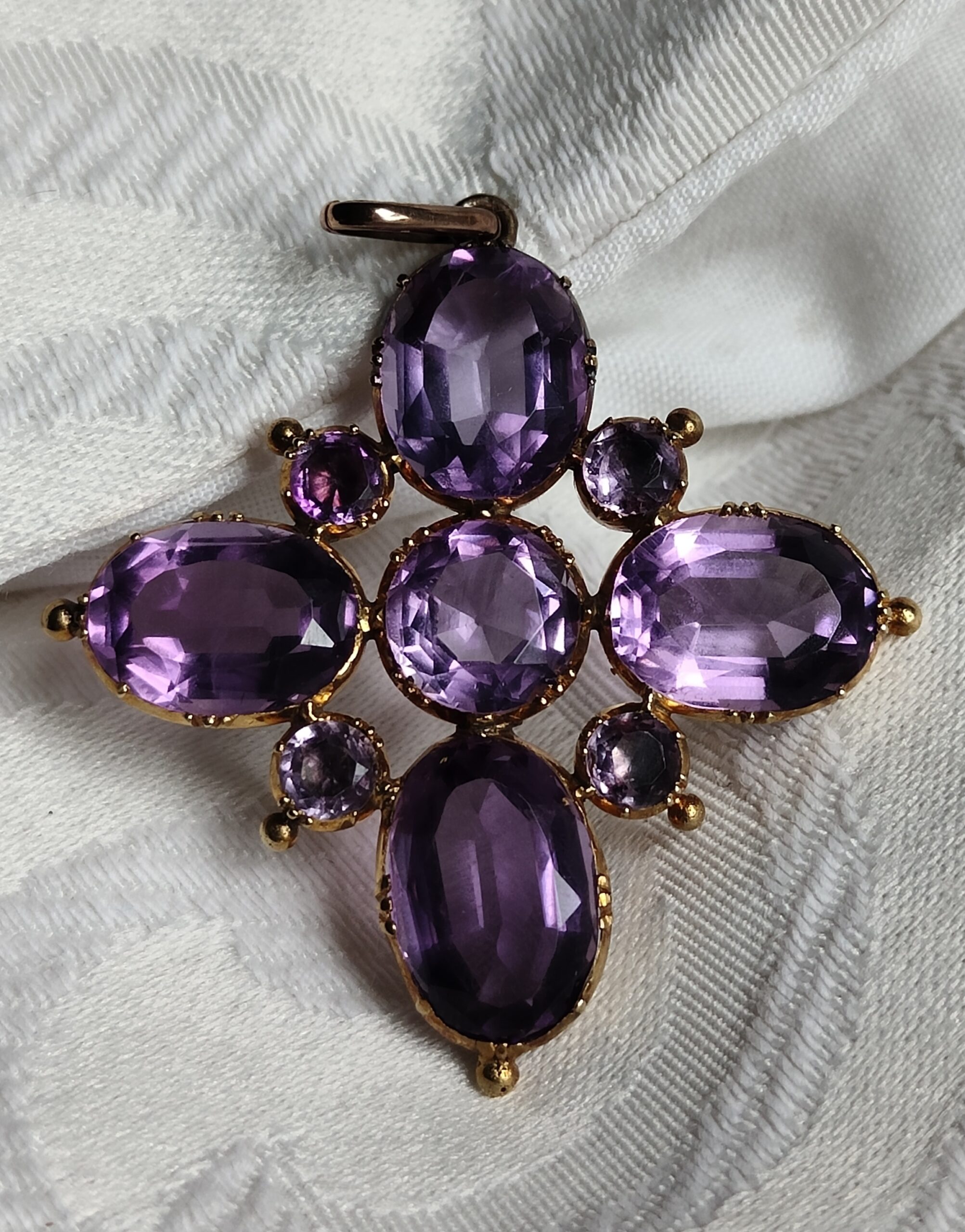
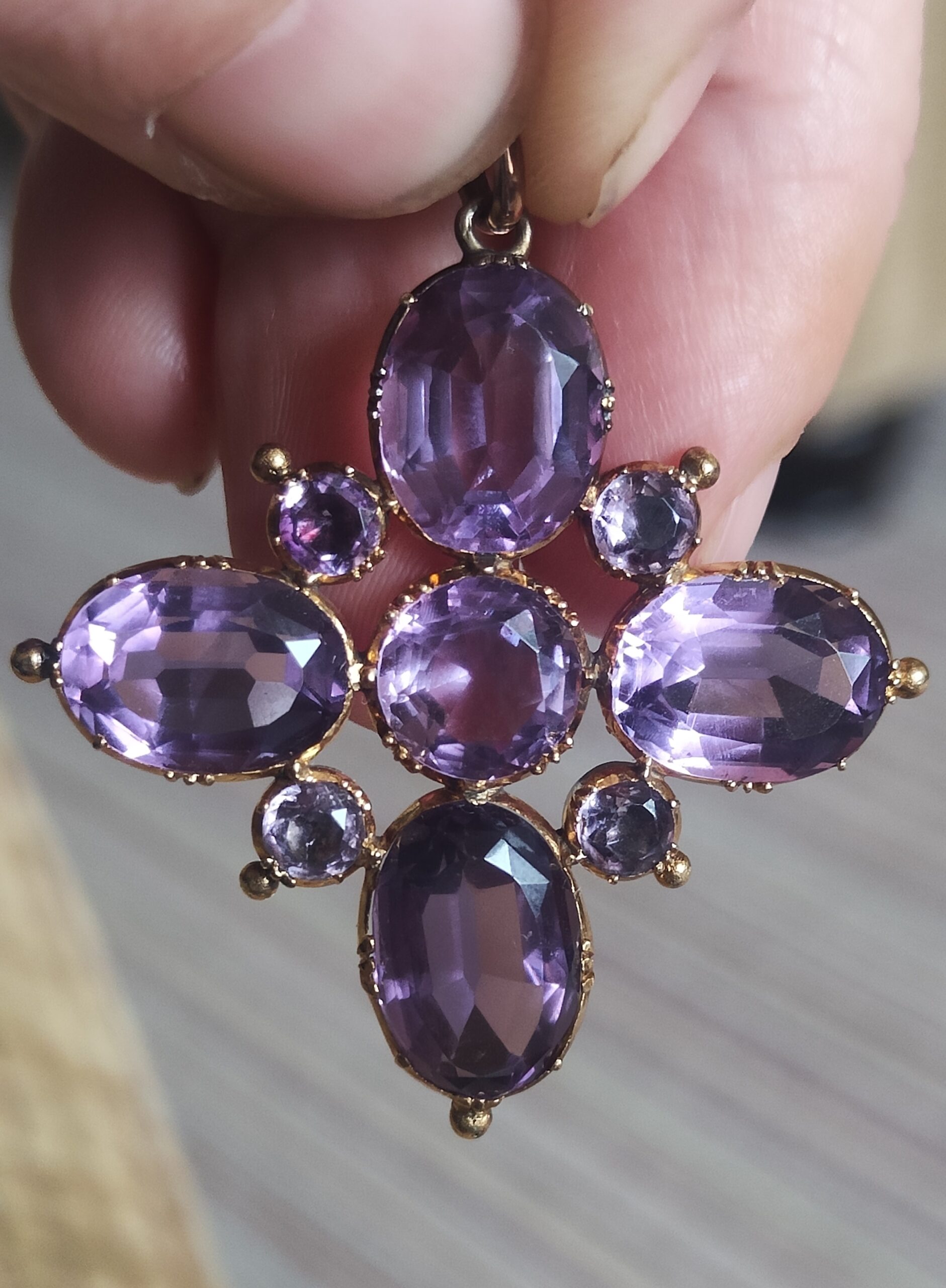
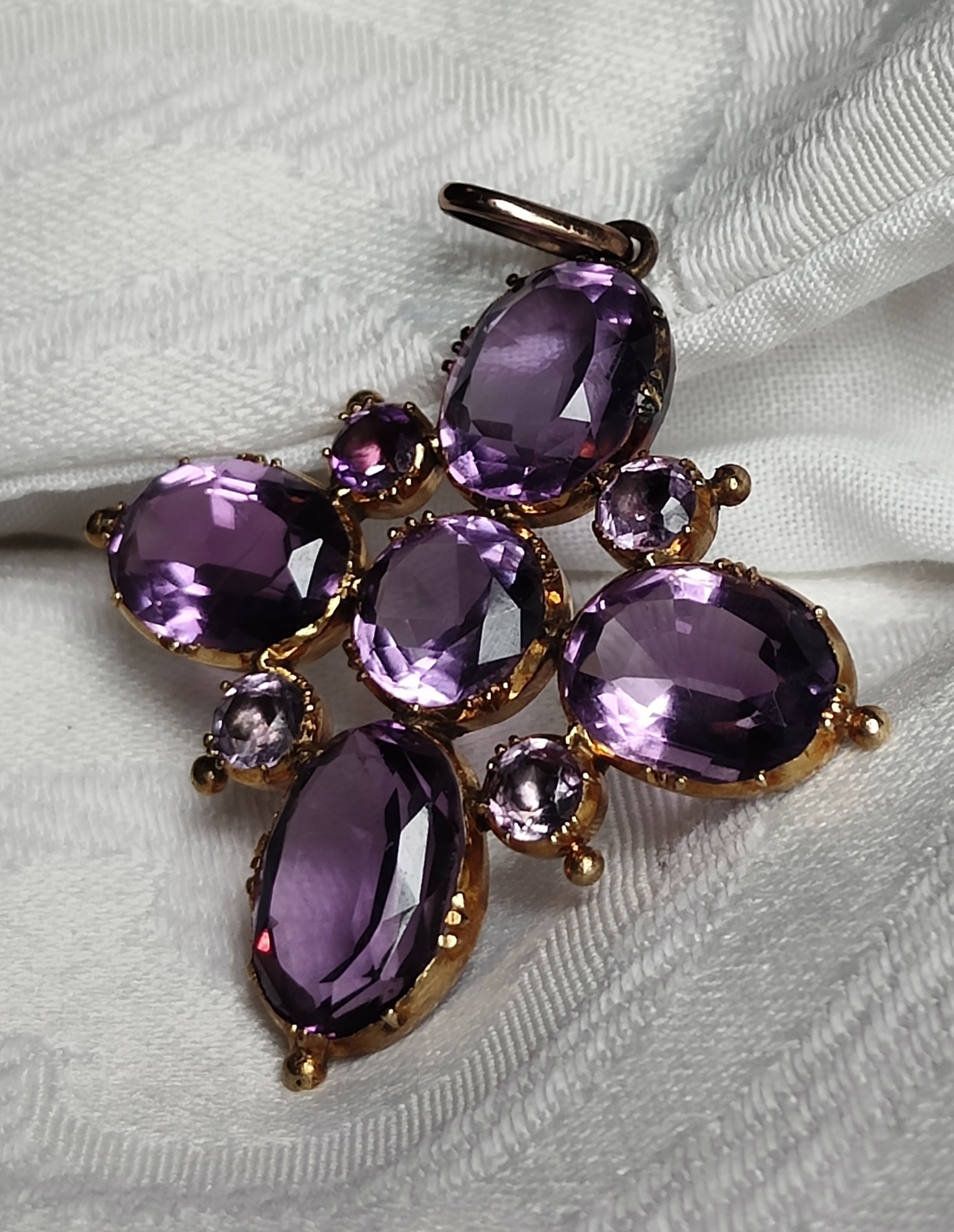
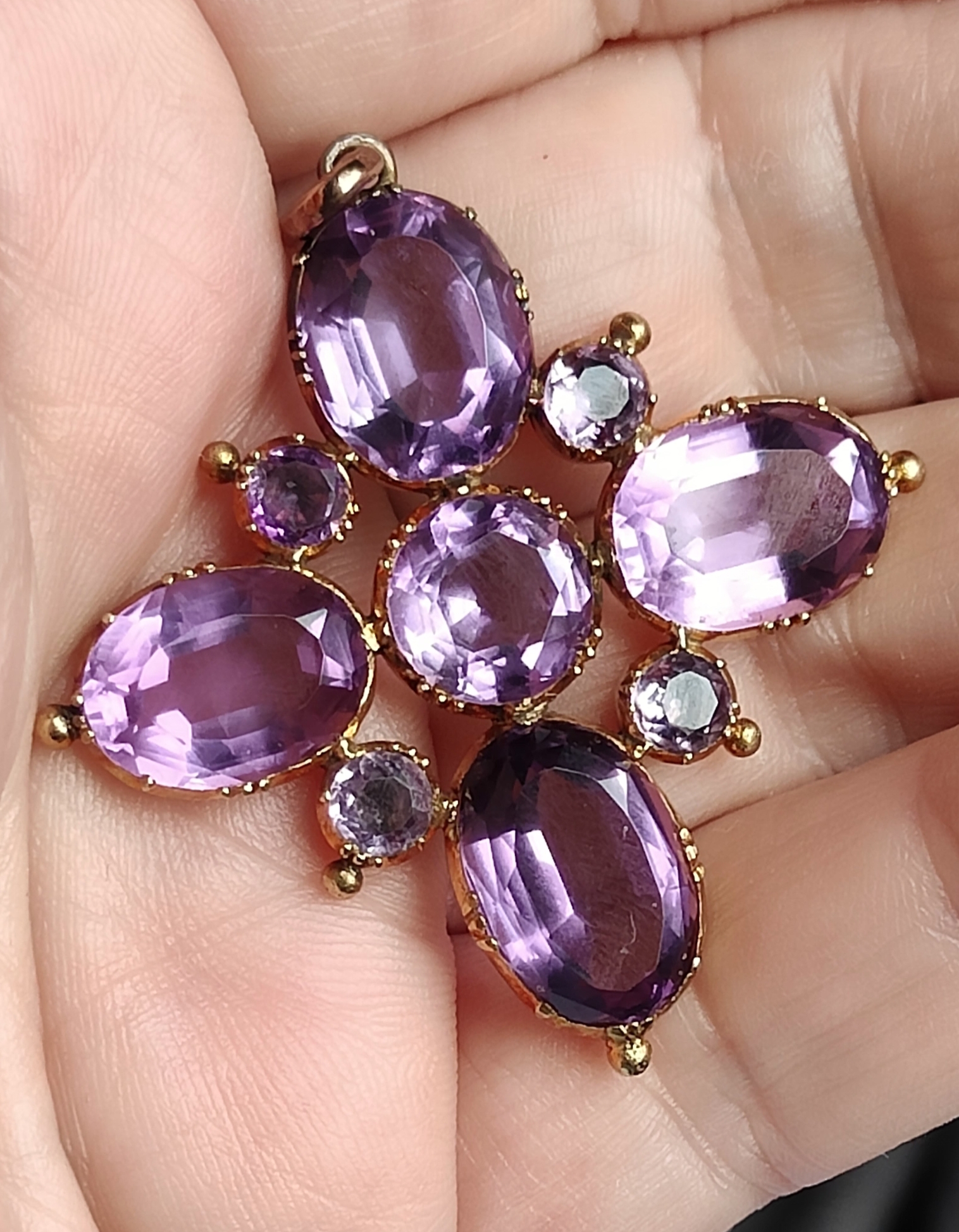
Georgian c1800-1820 Amethyst & Yellow Gold Maltese Cross Cruciform Pendant Antique
£1,295.00
CONDITION REPORT:
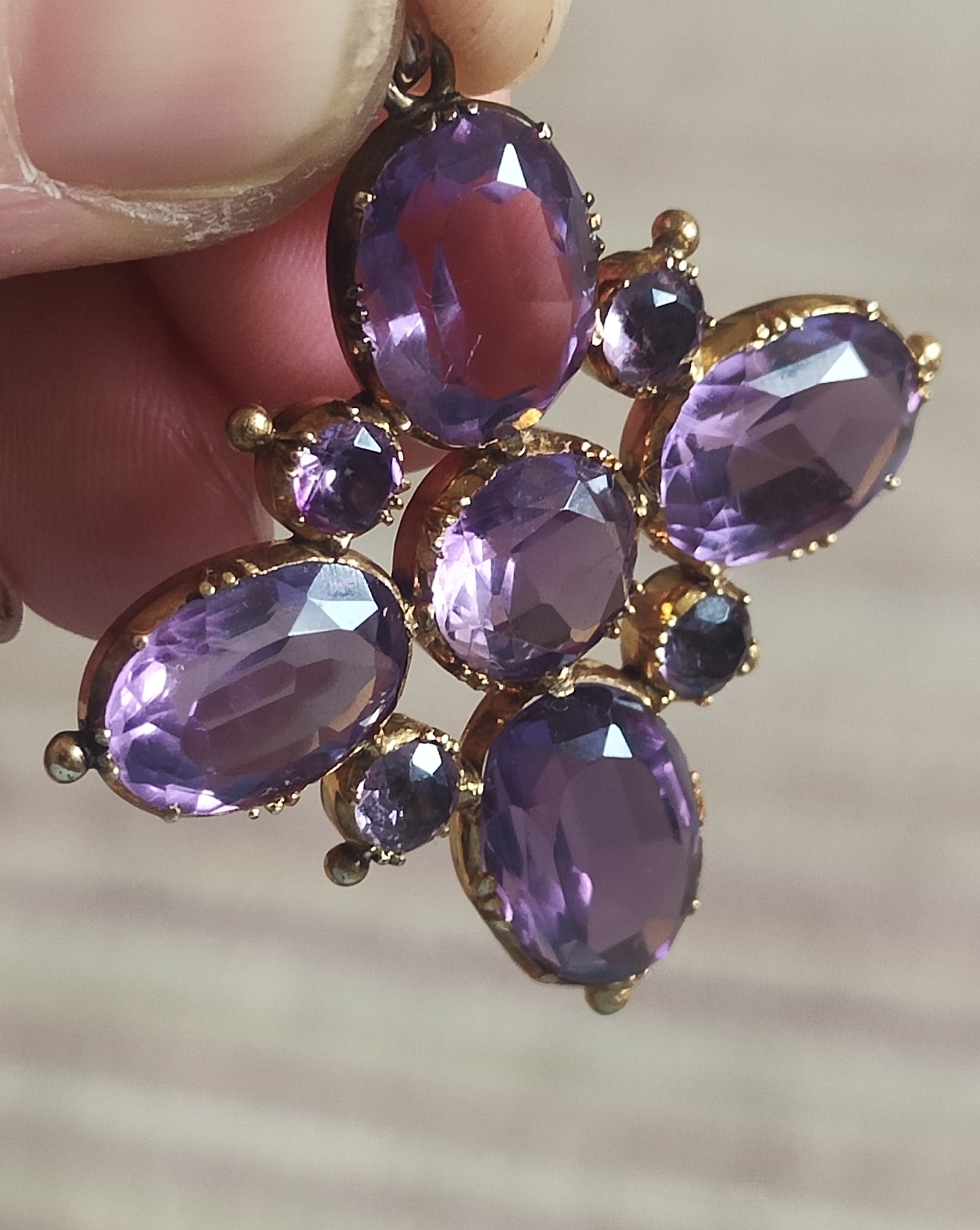
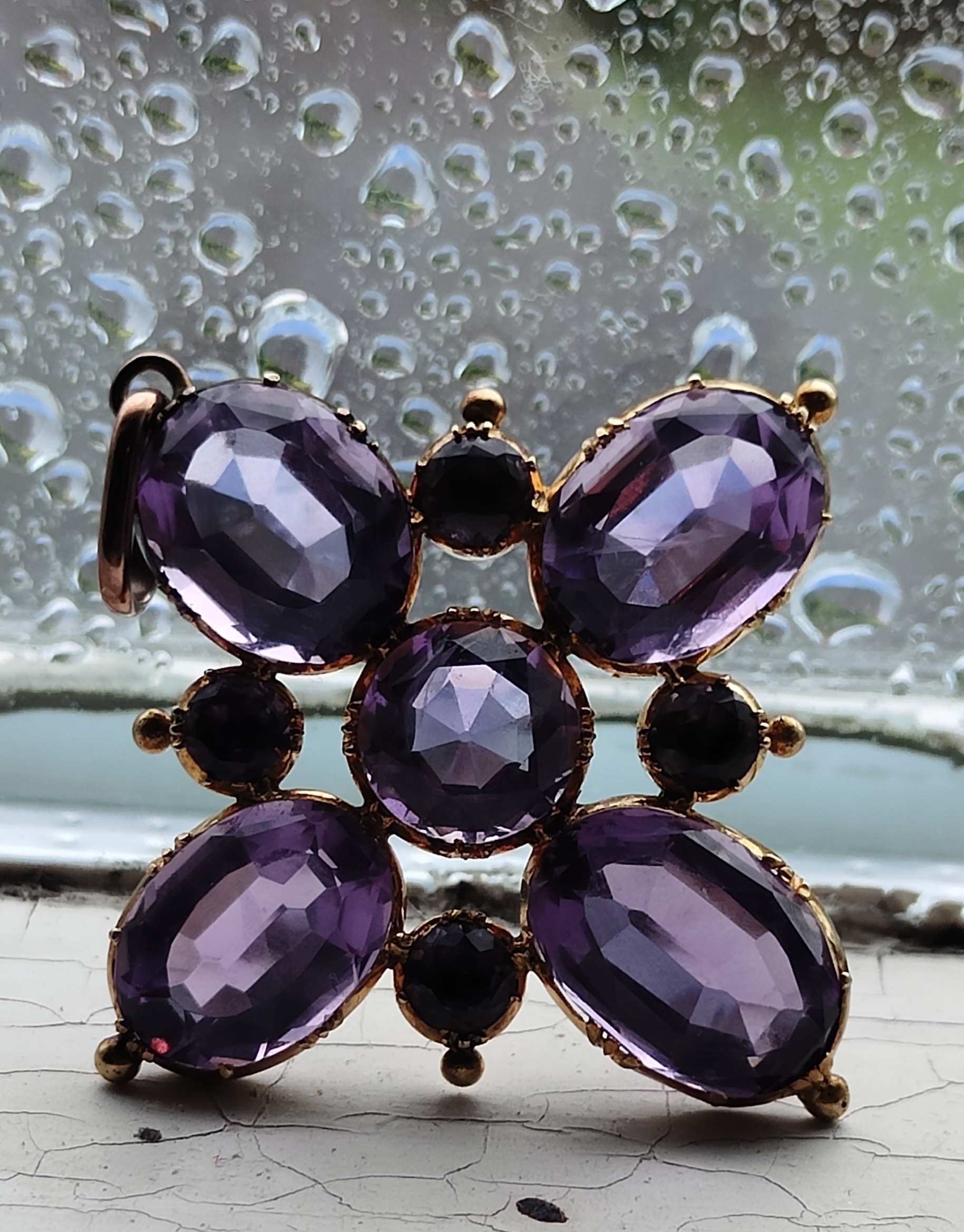
In excellent antique condition at circa 200 years of age. The stones are immaculate: no chips, cracks, scratches or flea bites. The gold mounts are strong and secure with no movement, no indication of repair or replacement: every part is original. The only issue is a minor one: a light knock to the rear gold mount of the southern main stone. This is very slight and does not affect the safety of the stone, which is utterly secure and in no danger. PLEASE STUDY ALL PICTURES CLOSELY.
Dimensions:- LENGTH:- 40mm
WIDTH:- 40mm
DEPTH:- 7mm
Weight:- 8g
Materials:- NATURAL AMETHYST/ SOLID YELLOW GOLD
Origin:- UNITED KINGDOM
Era:- GEORGIAN c1800-1820
Stamps:- NONE: PRE HALLMARKING
Handmade:- YES
Original:- YES
PRICE:- £1295
The Maltese Cross is an ancient symbol dating back to the Crusades, but began to appear in British jewellery c1790, in response to the Napoleonic Wars: the French occupied the strategic island of Malta, and when the populace rose up, the British saw an opportunity to create a military blockade. At home, people began to wear versions of the Maltese Cross in support of the Maltese versus French oppression, until the fashion died out c1830, to be revived later in the Victorian period.
Georgian Maltese Crosses were typically forged using gold and gemstones, and particularly in pendant and brooch form. At the time this stunning pendant was made, substantial, high quality gemstones of good clarity, excellent colour saturation and depth (unlike the flat, sliver cuts of earlier in the period) were coming to be set in open backed pinched collet settings, such as with the 5 largest purple amethyst stones here. All 5 of these natural gems are superbly colour matched and expertly hand cut; and supported with 4 amethyst accents, themselves set in foiled, closed back crimped collet mounts. In the Georgian period, before the discovery of further mines, amethyst was considered a Cardinal gem, along with Diamond Ruby Sapphire and Emerald, and thus was extremely valuable and desirable throughout the Georgian to Victorian age. It’s scarcity and beauty cemented it’s status as a gemstone for the wealthiest only, this explaining the proliferation of purple paste jewellery from the 18th century to early Victorian period.