


c1800 AUTHENTIC GEORGIAN LOVER’S EYE MOURNING PORTRAIT BROOCH 18ct GOLD OUROBOROS MOUNT
£3,995.00
DESCRIPTION AND CONDITION
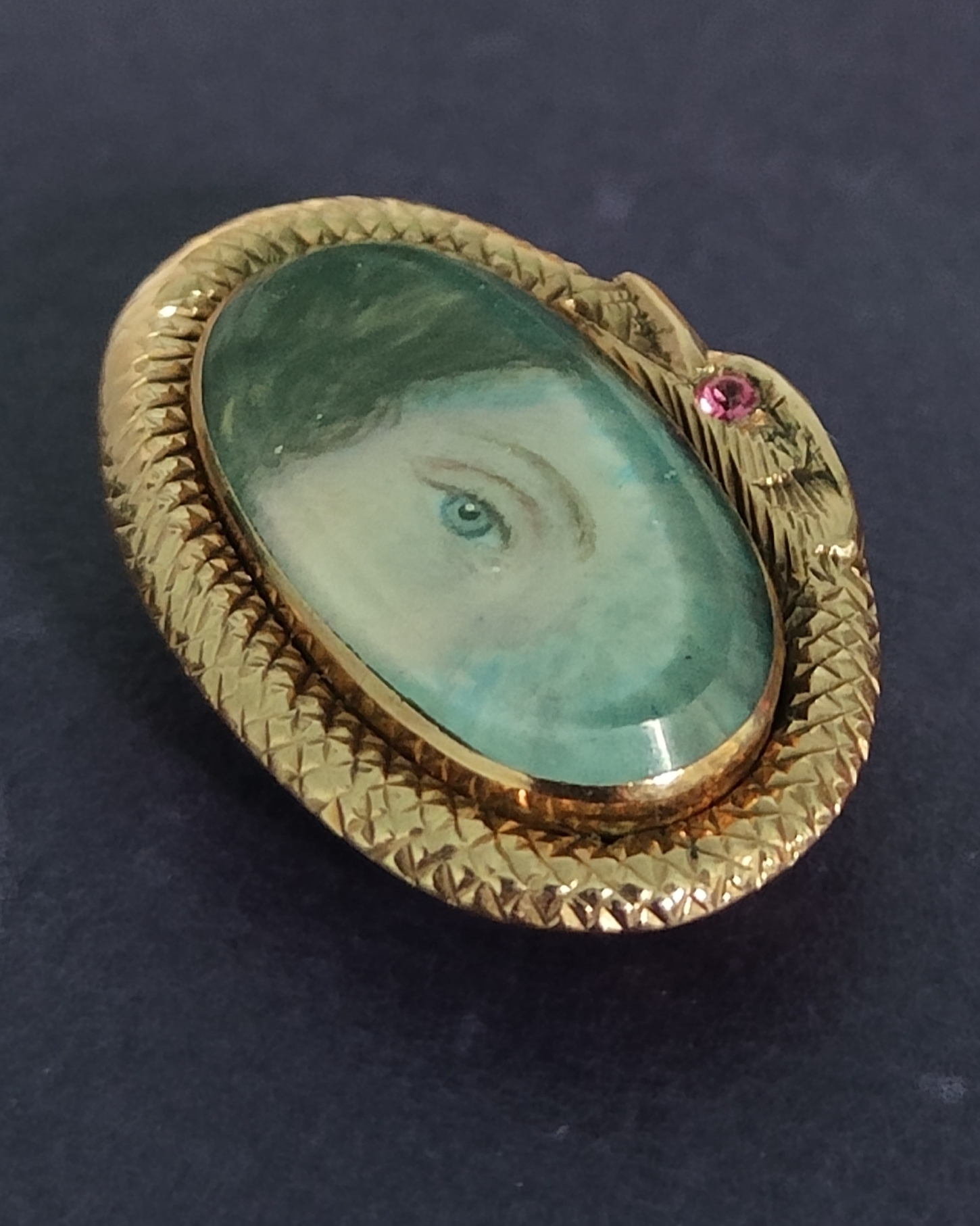
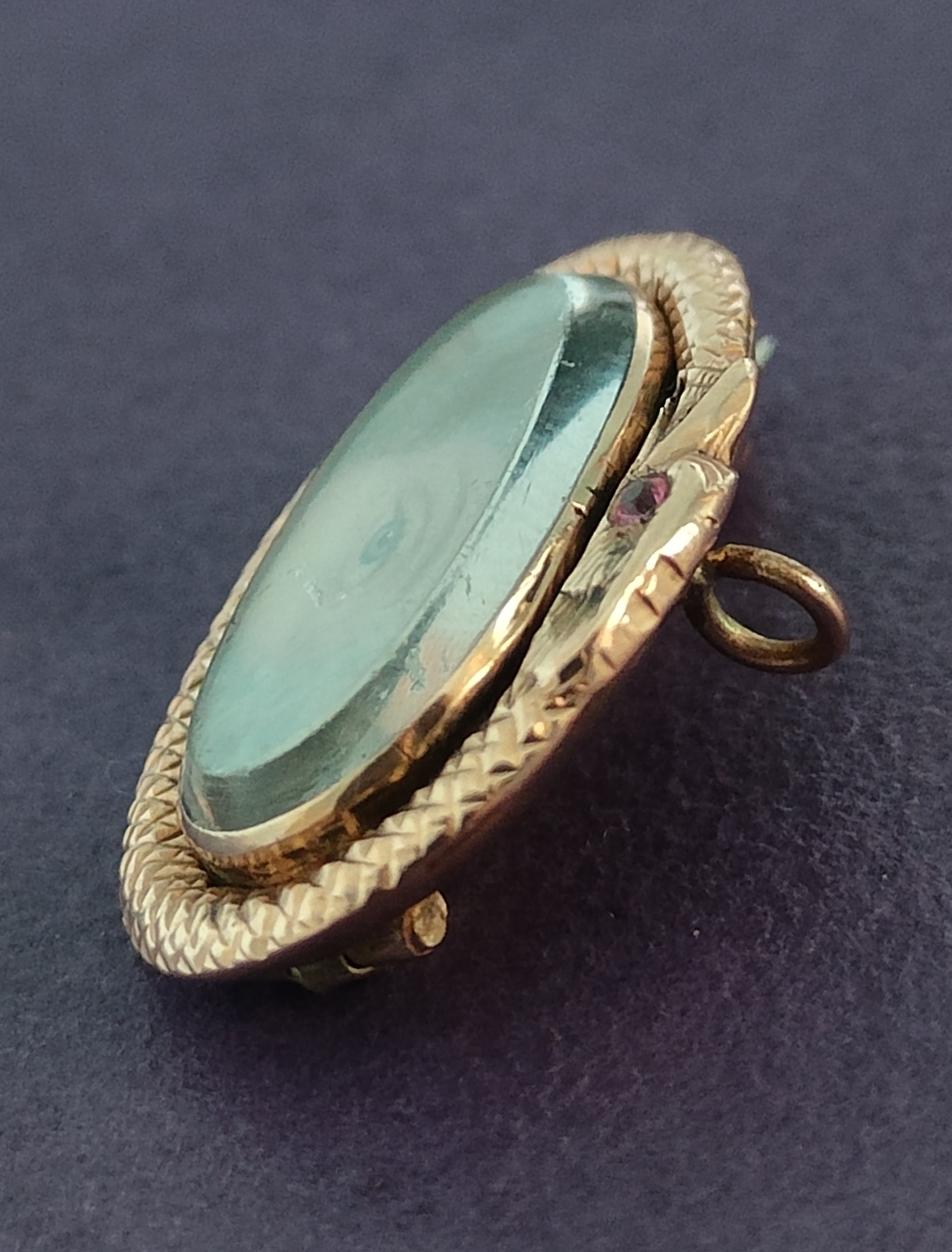
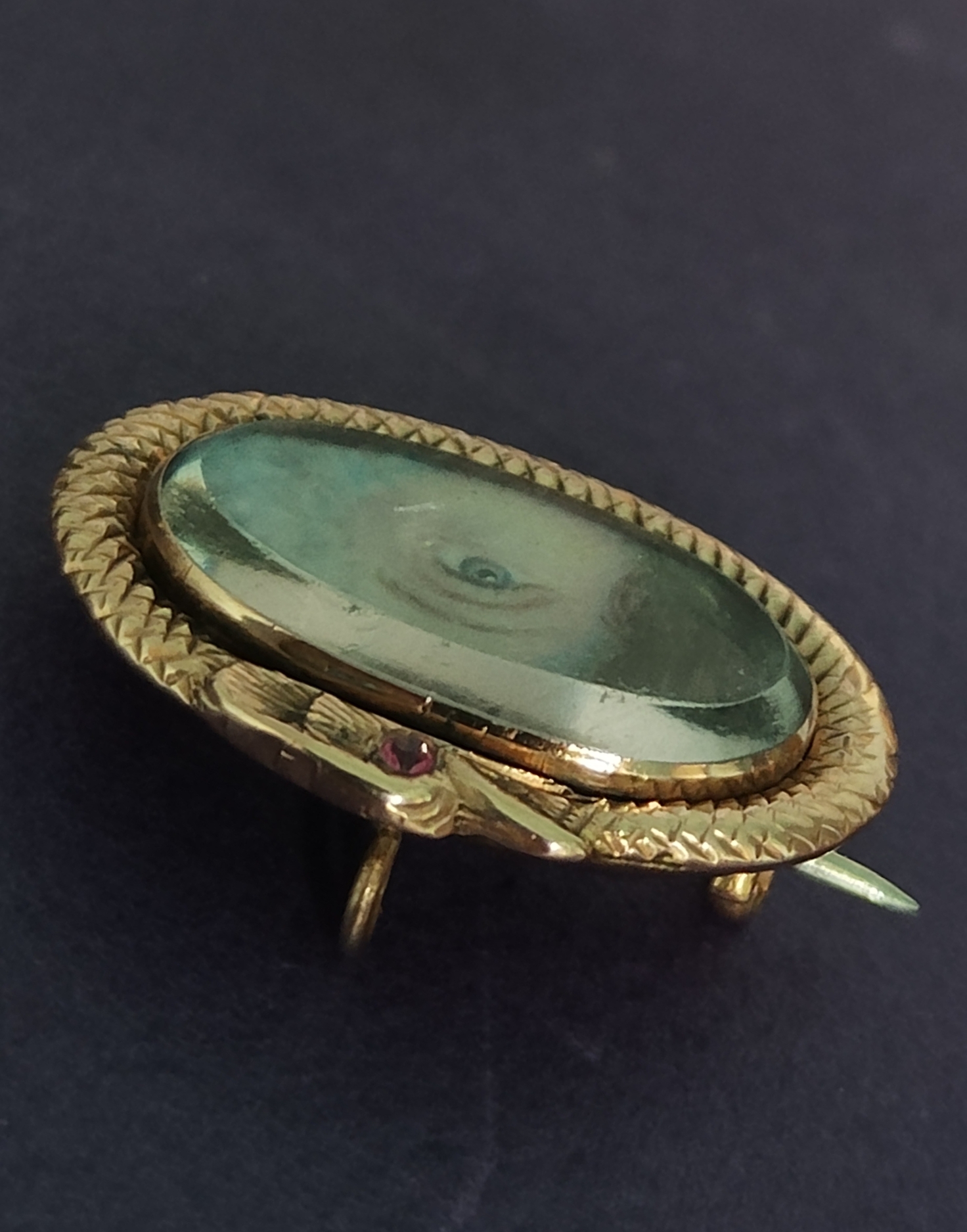
This sensational Lovers Eye brooch offers the guarantee of authenticity: all the details are correct, and a perfectly intact rub over gold setting seals the rock crystal panel in place.
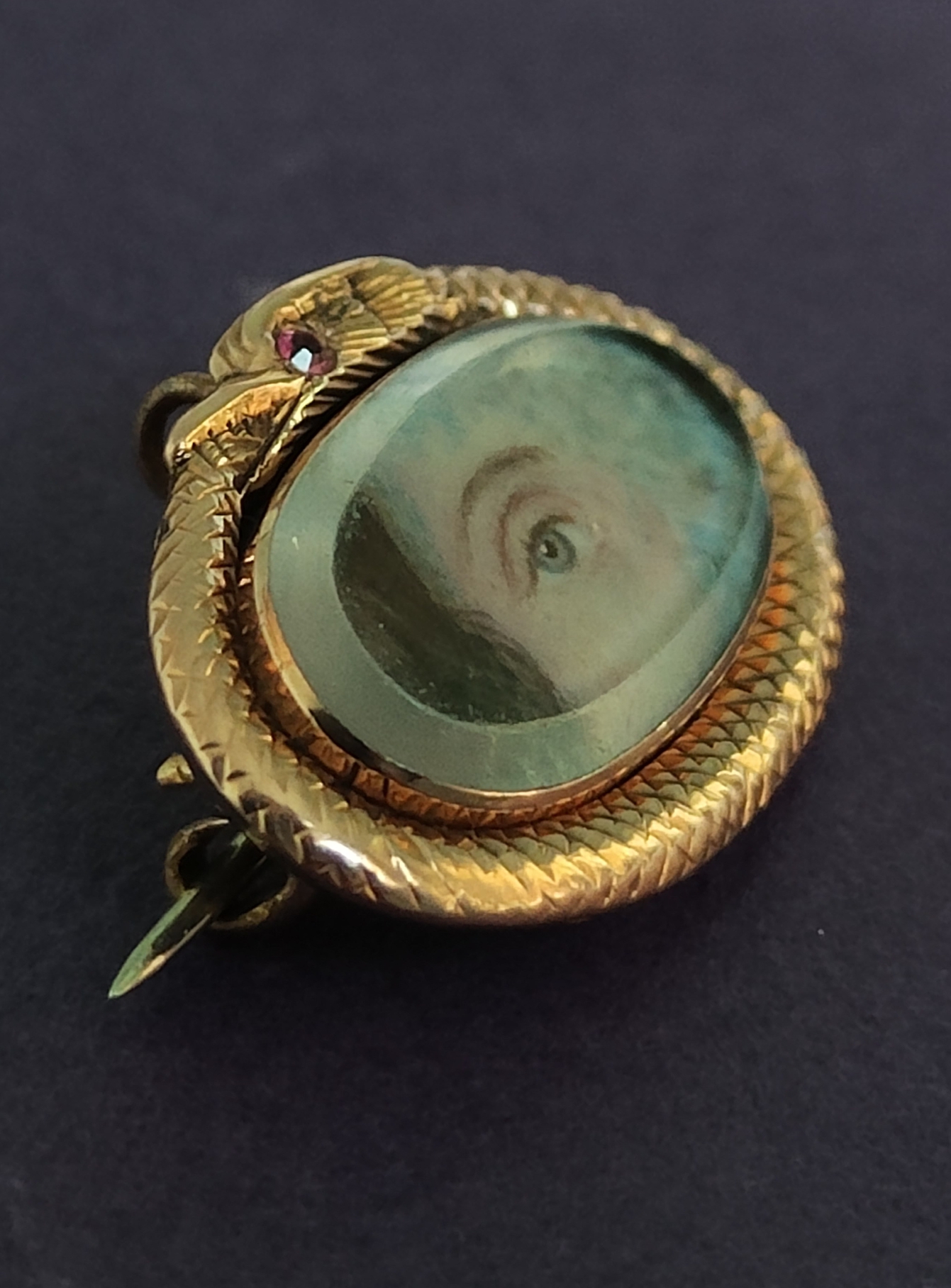
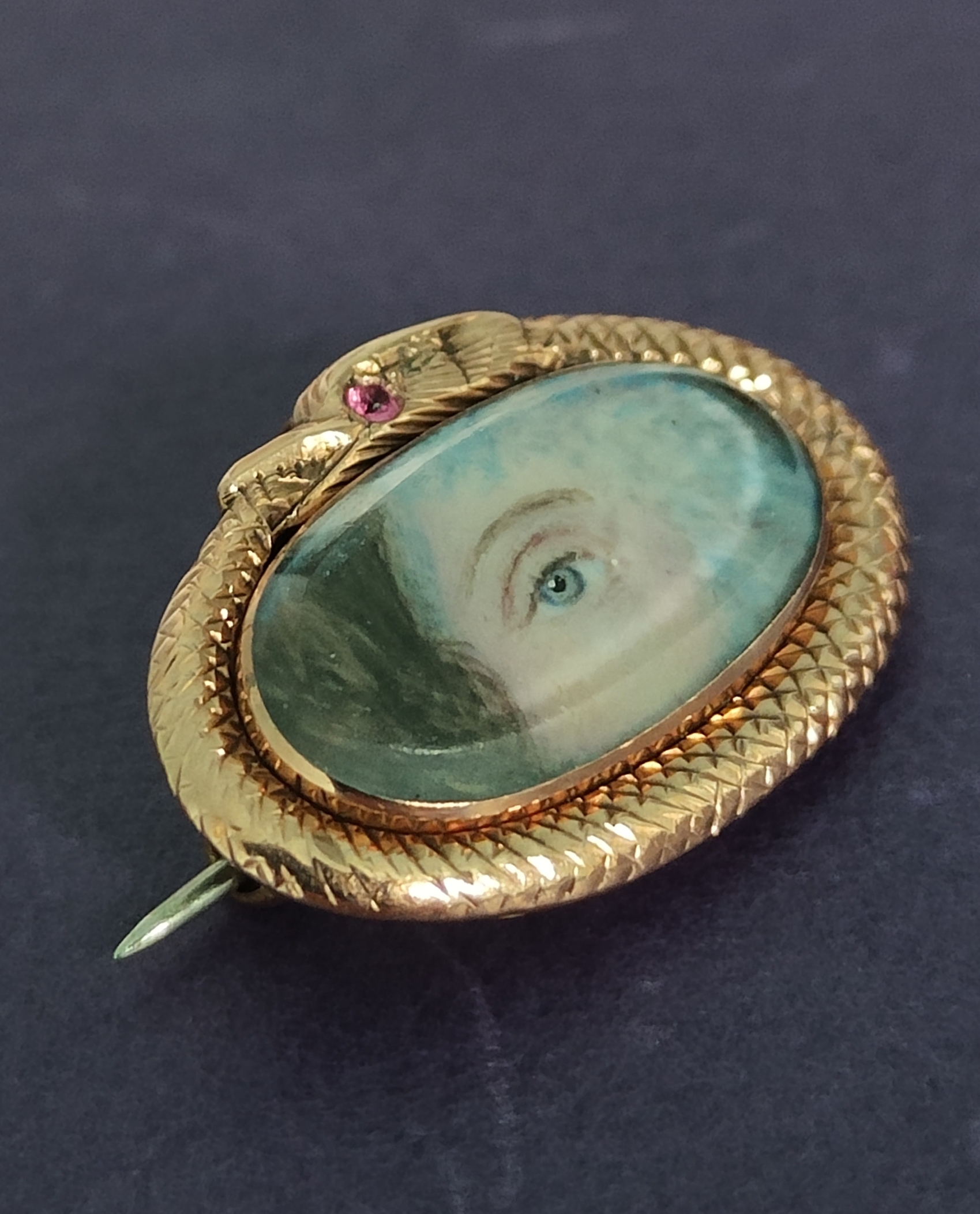
A popular Georgian symbol of eternal love, the ancient figural motif of eternity Ouroboros -the snake eating its own tail – was for a brief period c1795-1820 used to mount mourning brooches, and this lovers eye is itself a mourning tribute.
The body/ frame tests as 18 carat gold, the standard of the time, and the snake is set with a ruby eye. As noted, the locket panel is shaped and polished rock crystal, with a deep bevelled edge. The portrait itself is exquisite. Not all lovers eyes are spectacular, or beautiful, but this tiny portrait is painted with stunning detail and colour. Watercolour on ivory, as typical, only the single eye and eyebrow are present, which is correct: no other features should be included with the excepted occasional inclusion of a few tendrils, or slight fringe of hair to the side, as here.
The artist has skilfully applied the blue and white of clouded sky in and around the frame, blending it to merge with the space around the deceased lovers stunningly executed eye. What I find so intoxicating about this piece is its realism. To bring the eye, with it’s startlingly effective depiction of love and grief to life, contrasted against the soft, otherworldly gentleness of the watercolour palette, the artist has skilfully utilised the tiniest points of solid white, possibly using oil paint. The first point is applied to the eyeball, where it suggests the play of light, creating the illusion of curvature, with the second minute point becoming an unshed tear in the corner of her eye.
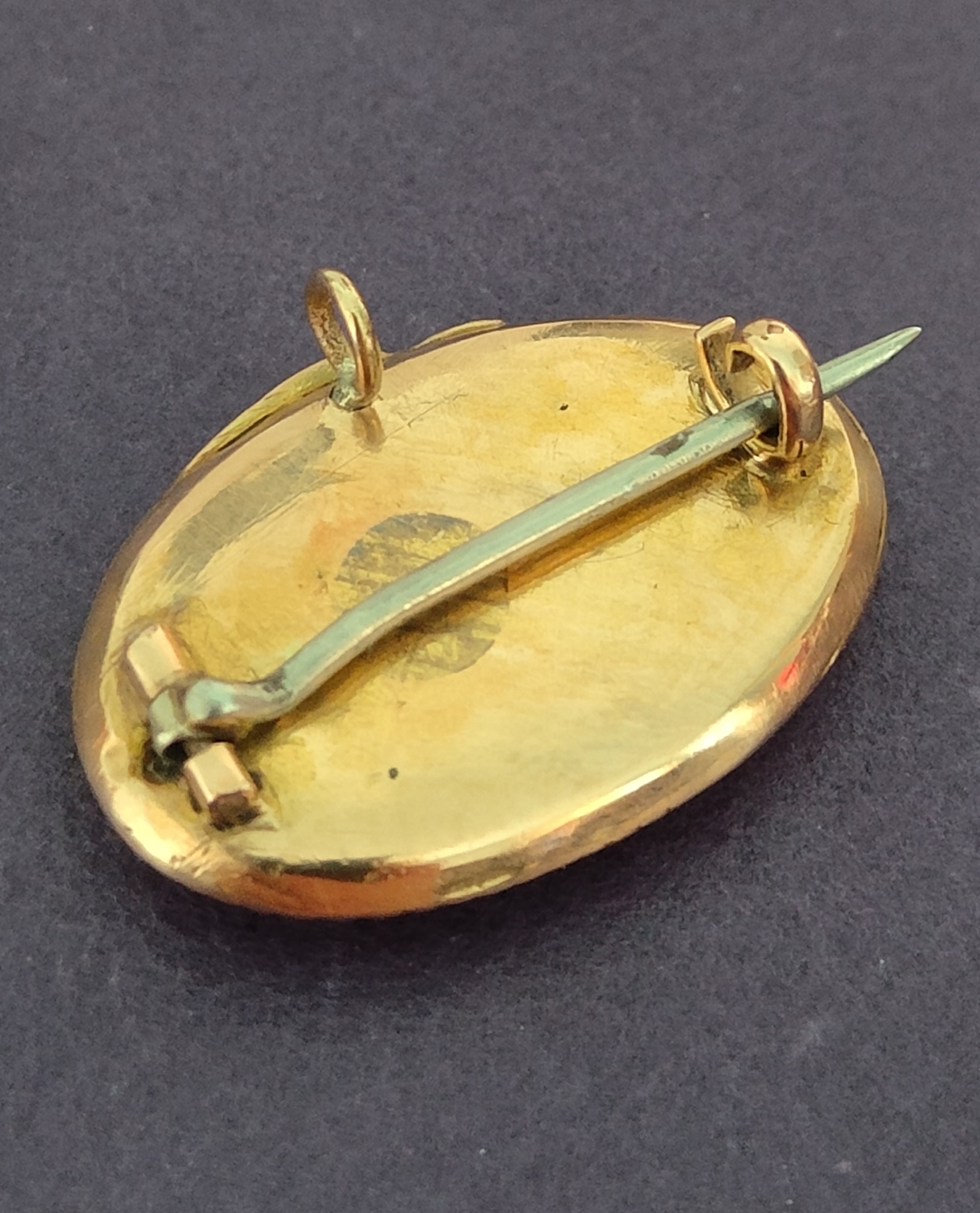
The condition is extremely good. The frame mount is completely free of injury, and as noted the rub over collet setting is immaculate. The crystal panel has some scratches, particularly to the top bevelled edge, but no chips or cracks are present, and the crystal is perfectly clear, the portrait in no way obscured. The back bears a lightly uneven surface, and the pin is a replacement, however the hinge and clasp all work well, and are secure. Overall this is an exceptional, one-of-a-kind example of a unique and extraordinary Georgian treasure.
PRODUCT DETAILS
Dimensions:- 22x15x4mm
Weight:- 3g
Materials:- 18ct/18k YELLOW GOLD/ ROCK CRYSTAL/ IVORY/ RUBY/ WATERCOLOUR
Origin:- UNITED KINGDOM
Date:- c1800
Original:- YES
A NOTE ON AUTHENTICITY
In addition to the information above regarding what should be present in an authentic lovers eye (only one eye, eyebrow and possibly a little hair, but hair to one side only, plus sky/cloud in mourning examples) and how that eye should be positioned (dead central if not mourning, potentially a little to the side if mourning, typically to balance the composition when the sky and cloud motif is used, but always gazing directly outwards) but there are other hints and tips to help you avoid wasting your money.
Authentic Georgian lovers eyes were for, and about, private, secret love, and as such were not made to be on show, but we’re worn under the collar, or close to the heart. Victorian revival pieces of the 1850s, and 1860s were not typically intended solely for private devotion and so regularly appear in deep and/or elaborate mounts, with decorative gold work, enamelling, and set pastes, as well as pearls, which in the Victorian period still symbolised mourning.
Counterfeit examples are also regularly set in Georgian/Victorian mourning brooches with brightly coloured paste or semi precious, halo set stones so watch out for this. A Georgian lovers eye is unlikely to be found in a mount of less than 15ct Gold, however I did own a very early example, c1795 set in a puffy, pinchbeck heart charm, but a 9ct brooch, pendant or ring mount is cause for caution, as Georgian eye miniatures were only created for the extremely wealthy, and 9ct gold was rarely used this early.
Thousands of mourning brooches, rings and clasps with a central locket window were made throughout the Georgian and Victorian periods, and these are the basis of counterfeit lovers eyes today. Both new paintings are used, as are eyes cut from small, antique paintings (a lovers eye would not be painted on canvas) and very often (due to their appropriate size) cut from portrait miniatures and put inside the locket of a mourning jewel. The eye should neither be too large or too small for the frame.
Modern artists, for example Irene Owens, legitimately paint lovers eyes and set them in antique mounts, beware these sold on as authentic antiques.
Always look for, and enquire about the seal around the glazed panel, also examine, or ask for close up images of the window edges; here small scratches can indicate tampering, as can be signs of a rub over mount that is not intact.
Please email with any inquiries, or for more information, thank you
HISTORY OF GEORGIAN LOVER’S EYE MOURNING PORTRAIT BROOCH
An excellent and extremely rare authentic Georgian eye miniature, original to the initial short fashion that spanned c1790-1815.
The Victorians revived the fashion in the 1850s and 1860s, Queen Victoria, ever the powerful influence in jewellery trends, was a huge fan. Sentimental, romantic, and with the Georgian love of symbolism still thriving, the appeal of the original Lovers Eye intoxicated the Victorian mind. Many, many more Victorian eye miniatures were made during this revival, than ever were in the Georgian period, and with the Georgian Revival trend of the late Victorian through to Edwardian periods, Lovers Eyes were still being produced, in some small way, up to the start of the 20th century.
The Museum of Modern Art in New York boasts an excellent collection, and in their literature write that less than 1000 authentic Georgian examples of the lovers eye still exist outside of museum collections.
A fashion that circulated only amongst the aristocracy, the lovers eye was borne out of a phenomenon that by this stage almost exclusively affected the social elite, the arranged marriage.
As the story goes, the eventual King George IV had a passionate love affair with the widowed, and catholic, Maria Fitzherbert. Forced apart, he sent her a portrait of his eye (so to preserve his anonymity) for her to wear under her collar. She returned the favour, and the fashion grew. Other sources claim that eye miniatures were worn amongst the French aristocracy already, perhaps where the future king (not a figure renowned for his intellect, or imagination) got the idea.
The aristocracy were expected to marry for the purposes of political or financial alliance between powerful families, therefore it was common for both sexes to take a lover. The lovers eye therefore became a romantic – and secret- form of connection: lovers exchanged them, so to gaze upon one another whilst they were apart. This gaze is intimate and fearless: a true, authentic Lovers Eye will therefore hold the direct gaze of the observer; any example where the eye is angled, or looking anywhere except directly outward should be treated with extreme caution.
Death was a part of every day life prior to the development of modern medicine, death in childbirth especially common, and Lovers Eyes with specific additional symbolic motifs depicting death and mourning soon became popular tributes. This brooch, framed by the figure of Ouroboros, is very uncommon. To suggest mourning, a halo of seed pearls, representing tears, is more usual. The brief period, and exclusive nature of the Georgian eye miniature, means original Georgian examples are extremely rare.
The counterfeiting (unfortunately, due to the proliferation of 19th century mourning jewellery, with its characteristic glass or crystal locket panel, means it is common, and quite easily done) and the selling of Victorian examples (themselves highly collectible and of value) as Georgian, either through ignorance, mistaken identity, or knowingly, is highly profitable, and consequently rife.
For further information PLEASE READ THE NOTE ON AUTHENTICITY INCLUDED AT THE END OF THE LISTING